Industry-Aligned
Engineering Programs

T.A.S programs are designed to bridge the gap between academic learning and industry expectations — focusing on practical engineering skills required in high-impact technology domains.
Program Tracks

Choose your Career Path

Two specialised tracks built around real industry hiring needs

Active
VLSI Engineering Program

Focused on developing strong foundations in digital design, RTL development, and verification methodologies aligned with industry requirements. Trainees graduate with both technical depth and professional readiness.

Digital Design RTL / Verilog SystemVerilog Verification VLSI Fundamentals
Upcoming
AI Engineering Program

Focused on preparing engineers for emerging roles in artificial intelligence and data-driven systems. Designed to align with the rapidly growing demand for AI-ready engineers across the industry.

Machine Learning Data Systems AI Fundamentals Python Coming Soon
VLSI Program — Curriculum

What You Will Learn

Five structured modules covering every layer of VLSI engineering

Module 01
Digital Design & RTL Development
  • Digital logic fundamentals
  • Combinational and sequential circuits
  • Finite State Machines (FSM)
  • RTL design using Verilog
  • Design optimization techniques
  • Timing-aware design practices
Module 02
SystemVerilog & Verification
  • SystemVerilog Deepdive
  • Universal verification methodology (UVM)
  • Testbench development
  • Functional verification concepts
  • Debugging methodologies
  • Introduction to structured verification flows
Module 03
VLSI Fundamentals
  • CMOS basics
  • Digital system architecture
  • Timing analysis fundamentals
  • Power and performance considerations
  • Semiconductor design flow overview
Module 04
Synopsys Tools
  • VCS, Verdi (Simulation & Debug)
  • Design Compiler
  • Synthesis & STA
  • SpyGlass
  • Lint & CDC
  • Formality
Module 05
Realtime Projects
  • SoC integration
  • SoC Verification
  • RTL IP - Design & Development
  • IP Verification - Planning to Signoff
  • Spec to Micro Architecture
  • RICSV Processor
Module 06
Engineering Practices
  • Structured problem solving
  • Debugging complex scenarios
  • Writing clear technical documentation
  • Code readability and organisation
  • Peer discussions and reviews
  • Professional communication
Training Methodology

How Training is Delivered

A structured, reinforced learning cycle — from concept to engineering discipline

📖
Concept Learning
Foundational topics taught with clarity and industry context
🧑‍💻
Guided Practice
Hands-on exercises with mentor support to reinforce each concept
🧩
Problem Solving
Real engineering problems that push critical thinking
📊
Continuous Evaluation
Regular assessments to track progress and course-correct early
🏆
Engineering Discipline
Graduates leave with strong habits that define high-performing engineers

Training at T.A.S follows a structured approach where concepts are reinforced through guided practice and problem solving. Trainees are continuously evaluated to ensure consistent progress and development of strong engineering habits.

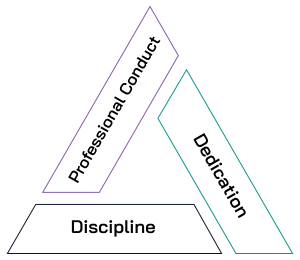
Discipline — structured schedules, rigorous routines
Professional Conduct — teamwork, accountability, ethics
Dedication — persistence, deep focus, quality outcomes
Program Outcomes

What Trainees Gain

Graduates completing the VLSI program are equipped with skills that matter from day one

Strong foundations in digital design and RTL development
Practical exposure to verification methodologies
Ability to understand and debug engineering problems
Familiarity with tools and workflows used in industry
Professional discipline required in engineering roles